Why Sustainability-Based Investing Should Simply Be Called “Investing”
By: Mike Wood
The collision between a destabilizing climate and a deeply interlinked global economy has transformed what once seemed like distant environmental risk into present-day financial reality. Climate driven disruptions are no longer “one-off” anomalies; they’ve become structural forces reshaping supply chains, risk models, and portfolio performance.
As investors adapt to this new landscape, the line between sustainability-based investing (SBI) and “normal” investing is dissolving fast. In this environment, sustainability isn’t a moral add-on or branding exercise—it’s the foundation of long-term value creation and capital preservation.
The Economic Toll of Climate Disruption
Human-driven climate change is now measured not only in temperature charts or biodiversity loss but in balance sheets, insurance claims, and market volatility. The global economy has lost more than $2 trillion to extreme weather events in the past decade. In 2025 alone, climate-related disasters inflicted an estimated $220–$395 billion in total losses.

Hawaii Kona Low Storm
When the Weather Becomes the Market
The 2026 back-to-back Kona low storms in Hawaii illustrated the trend in real time. Over just two weeks, these systems unloaded more than five feet of rain in parts of the islands—3,000% above normal precipitation for the season. The results: more than $1 billion in statewide damage, destroyed homes, disrupted airports, and erosion of insurability for vulnerable regions.
The scientific consensus is clear: warmer ocean temperatures supercharge storms, while a hotter atmosphere holds more moisture, amplifying rainfall intensity. What were once “once-in-a-century” events are now recurring fixtures.
Three Channels of Economic Erosion
Climate instability undermines growth through several mechanisms:
Supply Chain Volatility: Weather-related disruptions ripple through global supply chains, often multiplying costs fivefold beyond direct physical damage. Droughts in 2023–2024, for instance, throttled Panama Canal traffic and reduced trade volumes by 10%.
Labor Productivity: Extreme heat functions as a hidden tax on commerce, reducing output. Lost labor hours already cost the global economy an estimated $676 billion per year.
Sectoral Collapse: Agriculture—the economic base for billions—is at particular risk, with potential 25% yield losses in the U.S. Midwest by 2050 if trends continue.
These are not isolated crises. Together, they signal a structural shift in the operating environment of business and finance.
Why Conventional Investing Has Become Financially Reckless
Traditional investment models rely on a simple premise: risks are random, diversified, and containable. Climate change breaks that logic. It introduces systemic risk—chronic, compounding, and impossible to hedge away through traditional diversification.
1. The End of Diversification
Climate disruptions are correlated shocks. Flooding and droughts (and the geo-political instability that flows from them), supply chain collapses, insurance withdrawals, and regulatory changes feed into one another. Diversification across geography or sector no longer guarantees safety when the same macro-environmental forces strike everywhere.
2. The Insurability Crisis
Insurance, often the hidden stabilizer of the global economy, is faltering. In the first half of 2025 alone, insured global losses hit $100 billion, the second highest ever. With premiums projected to rise 41% by 2040, many high-risk assets—coastal properties, drought-exposed farmland—are edging toward being uninsurable. Financial models built on predictable risk transfer suddenly face a missing safety net.
3. Stranded Assets and the Carbon Bubble
Markets still systematically misprice climate risk. Short-term profit chasing and incomplete emissions data perpetuate a massive carbon bubble, in which fossil-fuel-related assets are overvalued relative to their true long-term viability. The estimated societal cost of corporate emissions—$87 trillion—actually exceeds the total market capitalization of every public company combined.
4. GDP and Asset Value Erosion
By mid-century, climate change could erase 40–50% of global stock values. Even conservative models predict a 3–7% GDP contraction by 2100, with severe scenarios reaching 17% losses. In short, the very foundation of modern capital markets is being undermined—not tomorrow, but this decade.
Sustainability-Based Investing: A Different Kind of Logic
Sustainability-based investing (SBI) rests on a simple premise: portfolio performance depends on the health of the real world it inhabits. It requires reallocating capital away from activities that deplete ecological and social systems and toward those that reinforce resilience.
The model breaks down into three steps:
Divest from companies and industries that destabilize environmental or socioeconomic foundations.
Reinvest in entities that strengthen systemic resilience—or at least avoid contributing to its erosion.
Earn competitive, risk-adjusted returns over the long term.
Properly executed, SBI doesn’t mean accepting lower profit in exchange for virtue—it means recognizing how real-world constraints now shape financial outcomes.
How SBI Directly Mitigates Climate Risks
Redirecting Capital Flows
A growing share of global finance is shifting from high-emission industries to clean energy, resilient infrastructure, and natural capital restoration. This “decarbonization of capital” channels trillions into future-proof sectors, treating carbon intensity as a core measure of creditworthiness.
Incentivizing Innovation
Through lower borrowing costs and favorable equity terms, sustainable finance accelerates next-generation decarbonization technologies—from green hydrogen to carbon capture and regenerative agriculture. Investors aren’t just responding to climate risks; they’re actively funding solutions.
Enforcing Corporate Accountability
Large institutional investors increasingly use shareholder engagement to pressure high-emission firms into adopting credible net-zero transition plans. This governance-led leverage is changing corporate behavior faster than regulation alone ever could.
Building Resilience Across Markets
Sustainability-based investing doesn’t just lower emissions—it buffers the economy against volatility. Three mechanisms stand out:
Risk Mitigation: SBI integrates climate data into financial analysis, helping investors anticipate both physical damages and regulatory shocks (like sudden carbon pricing).
Market Transparency: Mandatory climate disclosures introduced by the SEC and EU in 2025–2026 force corporations into clearer reporting, punishing greenwashing and rewarding genuine progress.
Downside Protection: Companies with strong sustainability metrics tend to show better operational performance and greater stability during downturns, functioning as ballast in turbulent markets.
Returns That Compete—and Often Win
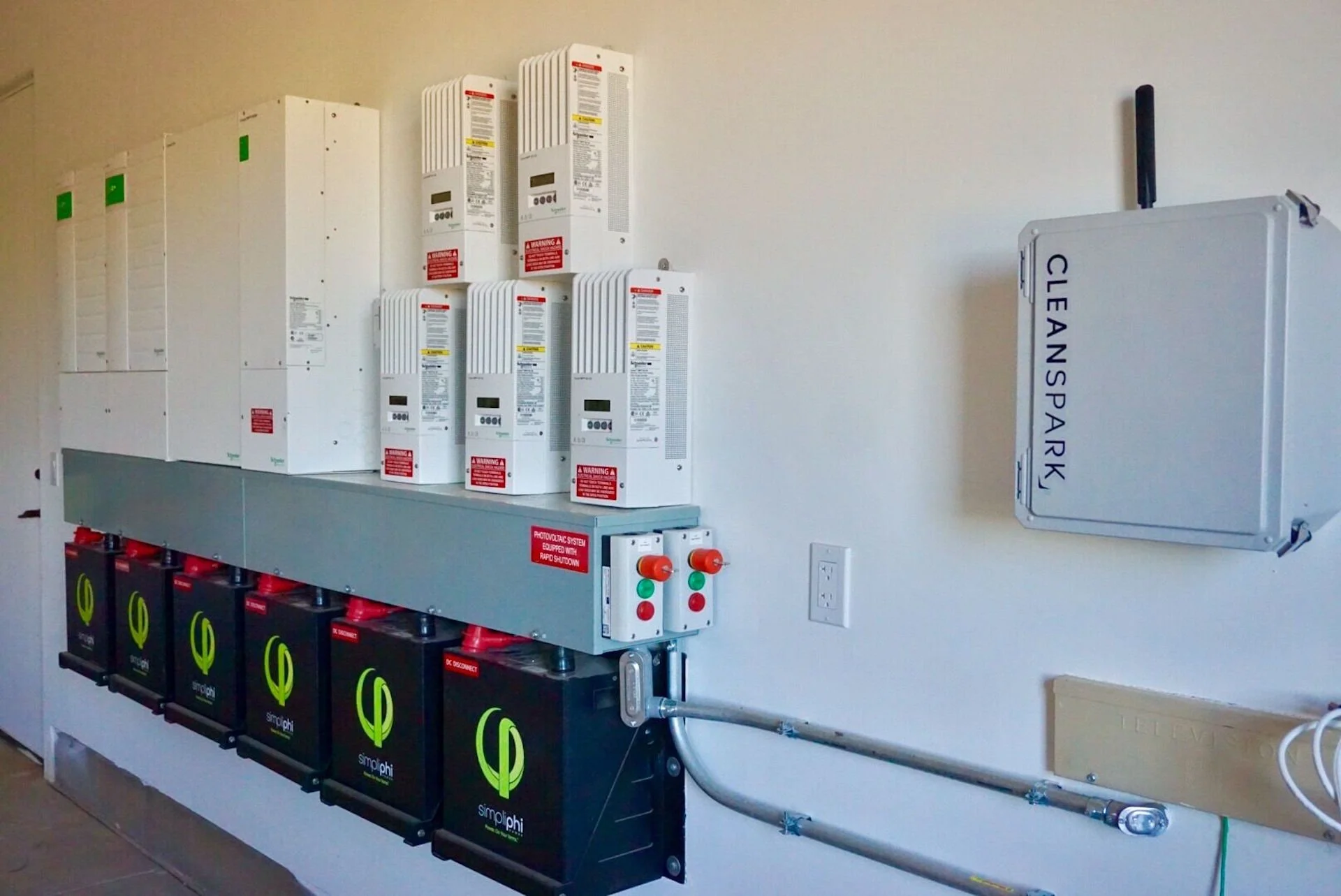
Solar backup batteries
The myth that sustainable portfolios must sacrifice performance has been debunked by extensive data. Over the past decade, SBI strategies have matched or outperformed conventional funds, particularly over long horizons.
The Numbers Tell the Story
A Morgan Stanley analysis found that a $100 sustainable fund investment in 2018 grew to $154–$162 by 2025, versus $145–$152 in traditional funds.
Over 80% of sustainable U.S. large-cap blend funds outperformed their conventional peers during the same period.
Market Cycle Realities
Performance naturally varies with market cycles.
2019–2021: Sustainable portfolios benefited from tech exposure and avoided lagging fossil fuel sectors.
2022–2024: Rising energy prices and tech concentration offset those gains.
2025 Rebound: Sustainable funds led the way again, posting median returns of 12.5%, compared with 9.2% for traditional funds.
In other words, SBI delivers competitive returns with reduced systemic exposure, making it a more intelligent, rather than more “ethical,” strategy.
The Scale Problem: Still Too Small
Despite exponential growth, SBI still accounts for only 6.5–11% of total global assets under management as of early 2026. The shift is underway but far but the pace and scale isn’t yet sufficient to counteract systemic instability entirely.
SBI operates within the same markets it seeks to reform. As such, it remains partially exposed to global economic forces shaped by unsustainable policy and consumer behavior. The goal is not to isolate investors from that system but to transform it from within.
The Policy Connection: Public and Private Must Work Together
No market can fix climate change alone. Systemic risk demands systemic coordination between policy and capital.
Complementary Roles
Governments correct externalities, internalizing carbon costs through taxes or emissions caps.
Investors supply the trillions of private dollars required for full economic transition—orders of magnitude beyond public budgets.
Positive Feedback Loops
As investors commit to sustainable assets, they lower political risk for policymakers to enforce stronger environmental regulations. This cycle reinforces momentum: regulation catalyzes investment, and investment makes stronger regulation feasible.
Infrastructure and Innovation
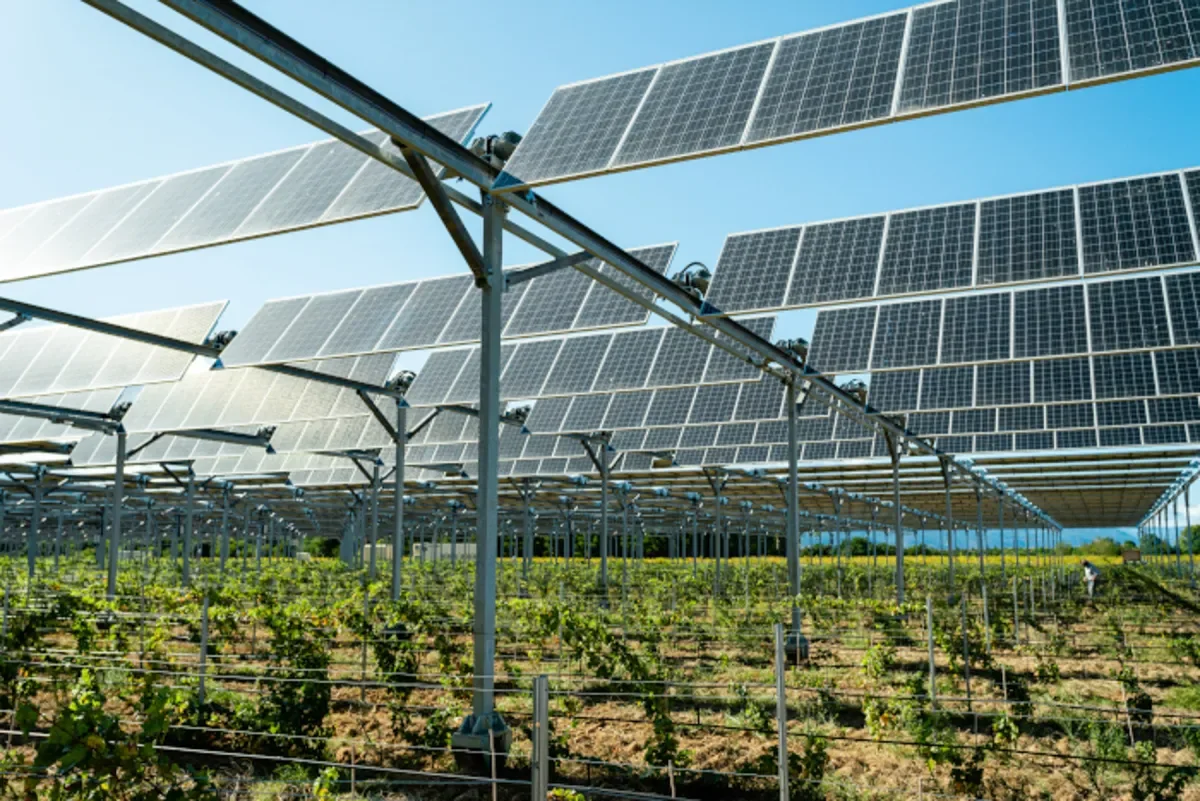
Solar pairs up with sustainable agriculture
Historically, governments built the foundation—roads, power grids, public research—while private capital commercialized innovation. The same blueprint applies now: renewable grids, EV infrastructure, and green R&D must become the new “roads and railways” of the 21st century.
Blended Finance for the Global South
In emerging markets, multilateral development banks use blended finance—mixing concessional public funding with private investment—to de-risk clean energy and adaptation projects. This model unlocks private capital at scale while addressing the world’s largest sustainability gaps.
Toward a Redefinition of Investing
The evolution of finance toward sustainability isn’t charity. It’s self-preservation. Value creation now depends on the durability of the environmental and social systems that make economic activity possible in the first place.
Ignoring these dynamics is not merely shortsighted—it’s financially reckless. Investors who continue to view sustainability as a sideline concern are effectively betting against the long-term solvency of the global economy.
The smartest investors are recognizing that climate stability equals market stability. Resilient ecosystems, functional supply chains, and protected labor markets translate directly into predictable earnings and lower volatility.
Sustainability-based investing therefore isn’t a niche factor strategy—it’s simply the future of investing itself.
The Road Ahead
As of 2026, the world sits on the cusp of a major capital realignment. The question isn’t whether sustainable investing will dominate, but how quickly markets will internalize reality. The faster the alignment between finance and resilience, the lower the ultimate cost of transition.
The logic is straightforward:
Unsustainable portfolios will face rising losses from destabilized systems they help perpetuate.
Sustainable portfolios will help rebuild those systems—and in doing so, preserve and grow capital.
This isn’t a moral choice or a marketing trend. It’s basic risk management. The future of investing will be sustainable—or it will be short.
SOURCES:
Aon. (n.d.). Transport and logistics: Climate volatility disrupts global supply chains.https://aon.co.za/insights/climate-volatility-disrupts-global-supply-chains/
Barata da Rocha, M., Grabbe, H., & Poitiers, N. (2025). Climate risks to global supply chains (Working Paper No. 20/2025). Bruegel. https://www.bruegel.org/working-paper/climate-risks-global-supply-chains
Fossali, S. (2023). Growing costs of inaction: Climate-related disruptions in global supply chain. Georgetown Law Denny Center. https://www.law.georgetown.edu/denny-center/blog/growing-costs-of-inaction/
Fried, C. (2025). The price of corporate America’s carbon emissions: $87 trillion. Chicago Booth Review. https://www.chicagobooth.edu/review/price-corporate-americas-carbon-emissions-87-trillion
Heeb, F. (2024). Sustainable investing and climate policies: Complements or substitutes? E-axes Forum on Climate Change, Macroeconomics, and Finance. https://e-axes.org/research/sustainable-investing-and-climate-policies-complements-or-substitutes/
Huang, J. (n.d.). Long term benefits of ESG reporting. Kleinman Center for Energy Policy. https://kleinmanenergy.upenn.edu/research/publications/mitigating-climate-change-through-green-investments/
Huang, J. (2025). Mitigating climate change through green investing. Kleinman Center for Energy Policy. https://kleinmanenergy.upenn.edu/research/publications/mitigating-climate-change-through-green-investments/
International Energy Agency. (n.d.). Clean energy technology innovation and the vital role of governments.https://www.iea.org/reports/clean-energy-innovation/
Morgan Stanley Institute for Sustainable Investing. (2025). Sustainable funds beat traditional funds in first half of 2025.https://www.morganstanley.com/insights/articles/sustainable-funds-outperform-traditional-first-half-2025
Sun, Y., Zhu, S., Wang, D., & et al. (2024). Global supply chains amplify economic costs of future extreme heat risk. Nature, 627, 797–804. https://doi.org/10.1038/s41586-024-07147-z
Thomas, E. (2025). How to tackle climate change in your portfolio. Morgan Stanley Wealth Management. https://www.morganstanley.com/articles/how-to-combat-climate-change-in-investment-portfolio
US Sustainable Investment Forum. (2025). US sustainable investing trends 2025/2026.https://www.ussif.org/research/trends-reports/us-sustainable-investing-trends-2025-2026-executive-summary
World Economic Forum. (2025, September). Sustainable finance in 2025: These are the key sectors redefining global markets.https://www.weforum.org/stories/2025/09/sustainable-finance-in-2025-why-investors-can-t-afford-to-look-away/
World Economic Forum. (2021, June). This is how climate change could impact the global economy.https://www.weforum.org/stories/2021/06/impact-climate-change-global-gdp/
World Economic Forum. (2025, August 8). Natural disasters have cost us $162 billion this year. Insurance covered most of it.https://www.weforum.org/stories/2025/08/global-insurance-industry-gap/